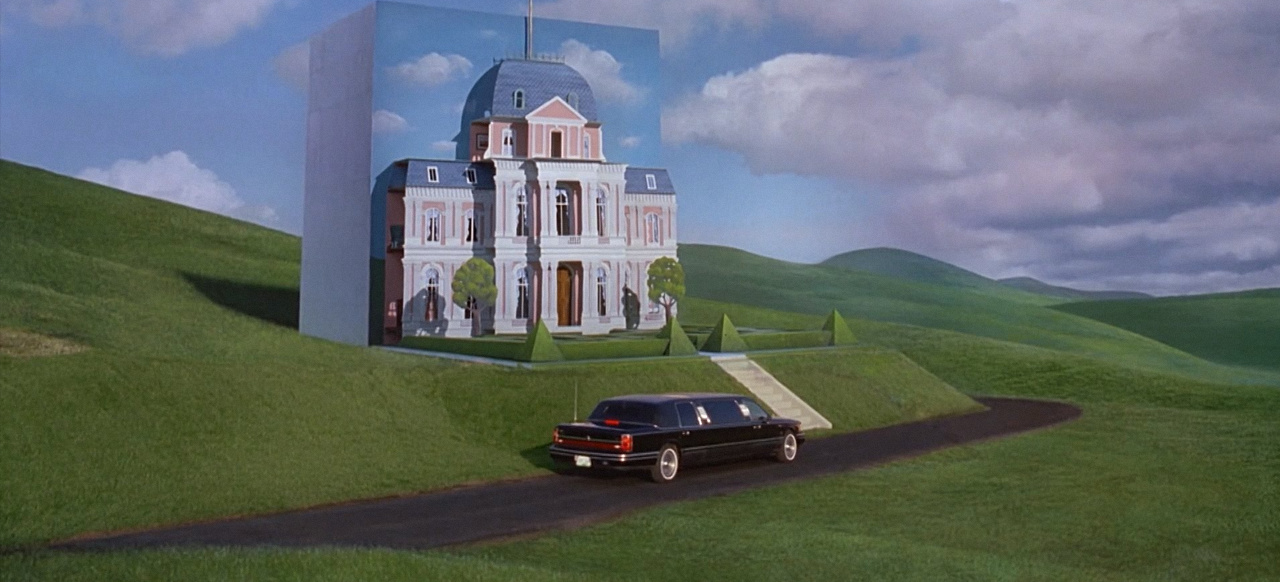
Of the endless micro-aesthetics on social media, dreamcore has emerged as a global artistic movement with a deep psychological impact. What began as a vague visual concept now marks a vivid extension of our collective consciousness. While the term “dreamcore” didn’t originate until 2020, its earliest notions date back to 2010s Tumblr photos, featuring low-fidelity backgrounds and uncanny edits. During the dawn of the pandemic, liminal photography surged as people documented abandoned spaces that seemed reminiscent of forgotten destinations. By 2020, dreamcore officially coalesced after multiple TikTok videos circulated pairing liminal images with childhood soundtracks.
Dreamcore may sound like it encapsulates an aggressively cute concoction of clouds and rainbows, although those images are only the visual reference for this aesthetic, rather than the whole picture. The underlying elements like the distortion of the natural world, the interruption of present mundanity, and the existential crises that result are what truly define and differentiate dreamcore from similar representative concepts. While dreamcore builds from the same retro symbols as many sentimental aesthetics (kidcore, nostalgiacore, etc.), it reimagines them in a peculiar format much like weirdcore. By blending these two extremes, dreamcore exploits the viewer’s uncertainty to evoke a lingering sense of dread. Unlike weirdcore’s overt depictions of hostility, dreamcore subtly plays on the subconscious, bringing suppressed feelings to the forefront.
Weirdcore: contrast, cryptic overlays, corruption, isolation
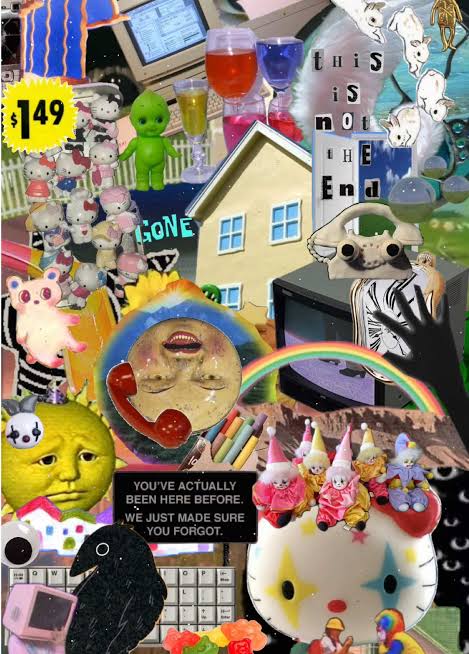
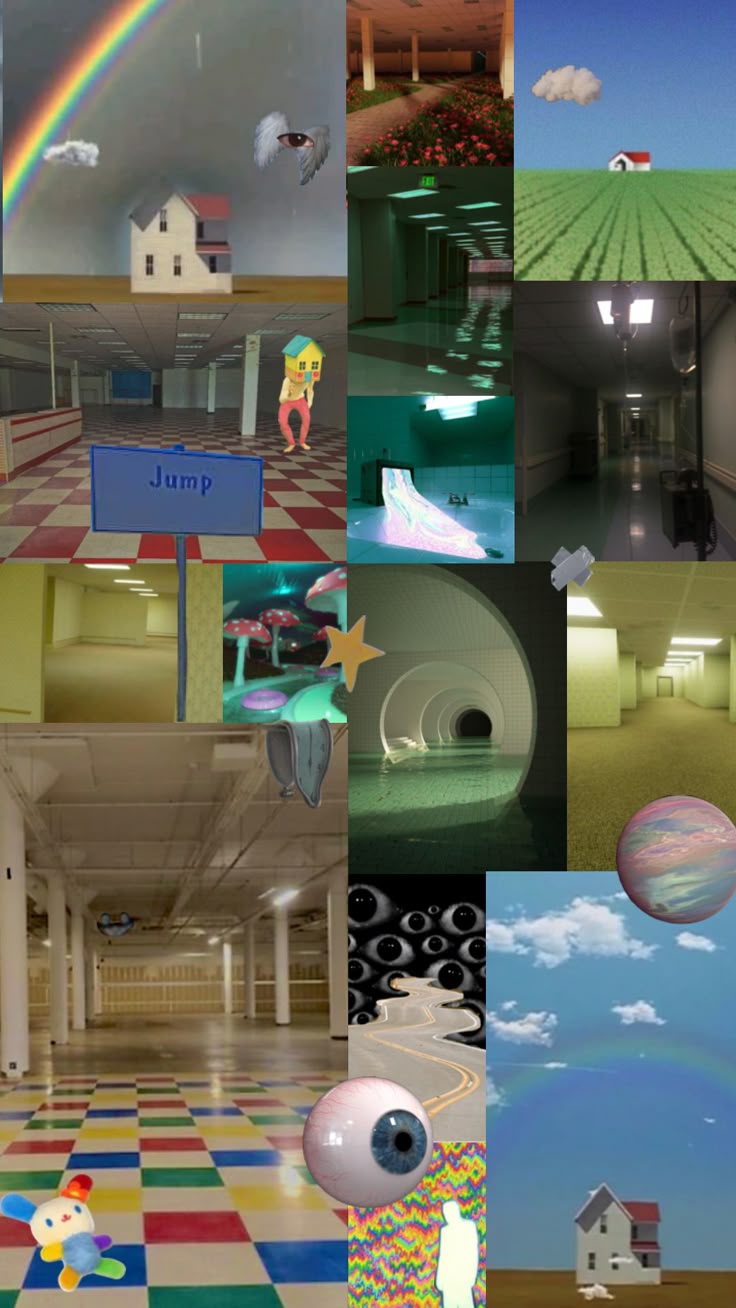
Dreamcore: pastels, whimsy, natural objects, familiarity
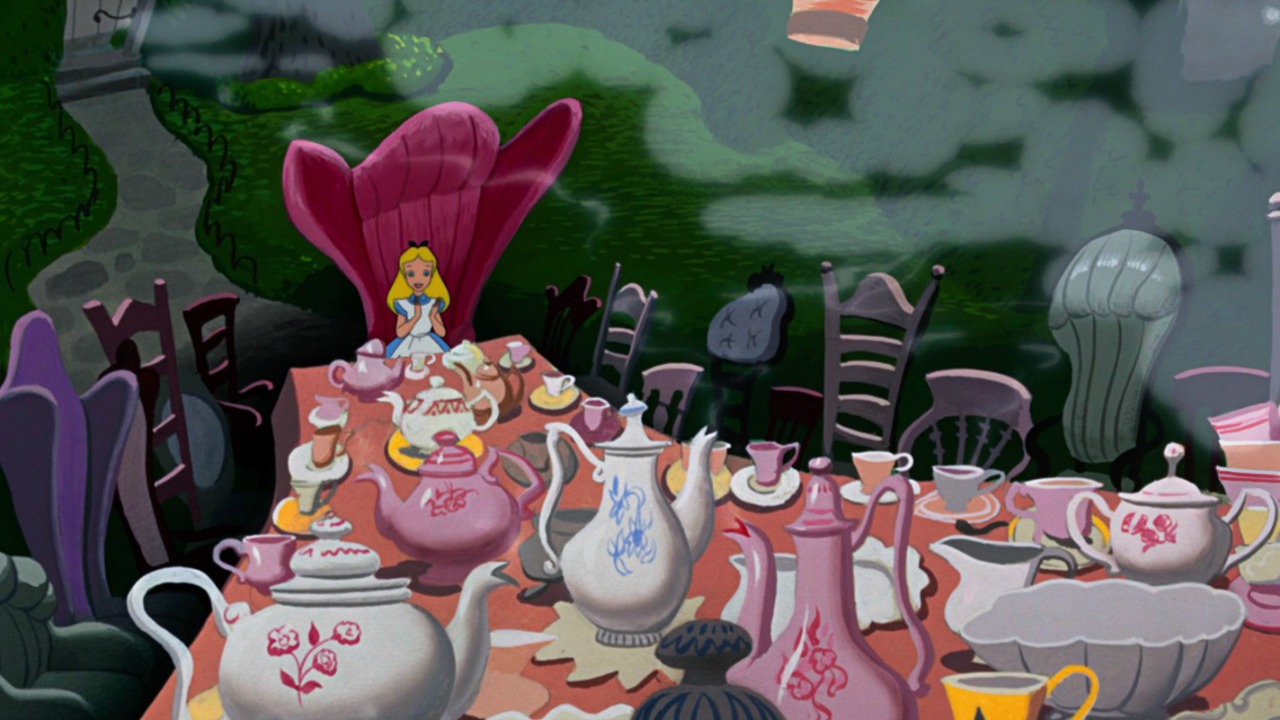
These three elements: distortion, interruption, and existentiality, can be noted in any dreamcore depiction. Take Alice in Wonderland (1951) for example. Alice, an archetypal ingenue, undergoes a curious adventure, unlike those most frilly and proper heroines are forced to endure. Alice “falls into the rabbithole,” (of which are normally no longer than 3-6 feet in length) and crashes into an underground yet parallel world with talking animals and dancing objects. She only discovers this reality after becoming disillusioned with the trite and uptight trials of the regular, and dreaming of a breachful escape. She then becomes entangled with the affairs of the odd characters, of whom she’d prefer to call her home, completing the dreamcore journey. The only caveat is that this fantasy now needs to end, as the dream can only eclipse the real for so long before it inevitably collides once more—this time, only more devastatingly.
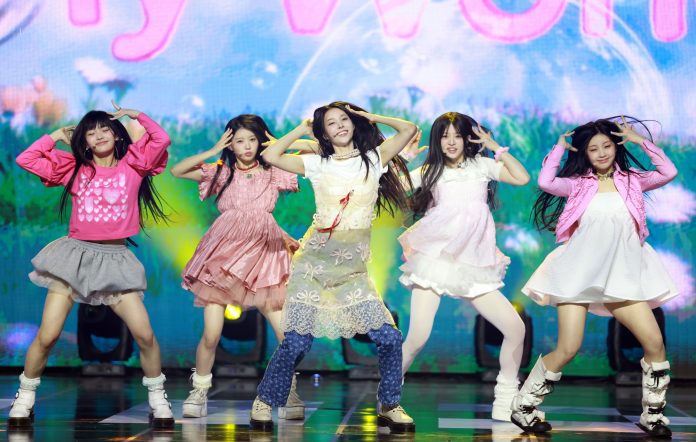
The indie 1992 film, Toys, starring the quirky Robin Williams, is another key depiction. This film is chalk-full of scenes and imagery that reimagine familiar landscapes in a way that is unsettling and almost unwarranted. The plot centers around the conflict between the creeping military society and the internal fight of childlike humans to preserve their innocence and whimsy. Modern and purposely more curated (thus poignant) examples include the young pop group Illit, known for their digitally cute sound (pluggnb), and the infamous “Backrooms” project.
“Backrooms” is an “analog horror” web series turned hit film created by Kane Parsons who became inspired by a creepypasta under the same name. His version explores a fictional research institution that experiments with test subjects who crawl their way into layers and layers of multidimensional and seemingly never-ending rooms. The 2026 film toys with the uncanny and unsettling nature of a place that defies nature and the psychological torture of memory that defines a mental space. The film also models the dreamcore formula well. The places depicted in the film, from the therapist’s office, to the dying furniture chain store, are all commonplace and dreadfully mundane but manage to evoke so much apprehension when they become the backsplash for unhinged characters and the home of the mysterious backrooms.
Despite so many modern examples of the dreamcore aesthetic in film and other art forms, its fundamental exploration of perspective and interpretation dates back to early surrealist practices outlined by André Breton in his 1924 Manifesto of Surrealism. Breton proposed that employing subconscious expression with free thought would lead to a superior surreality. Those who explore the subconscious space can reclaim the best parts of childhood in which possibilities seem endless and they experience the world anew. Ultimately, this untamed perspective “comes closest to one’s ‘real life’ (pg. 5),” since children navigate existence in its purest form. While the imagination knows no bounds, adults exercise their autonomy in strict accordance with arbitrary laws. If their imagination drifts too far, they eventually “snap back into reality” to resume their current fates. Under the illusion of progress, people opt to search for truth in the most obvious of places—making dreams a necessary defense mechanism for sanity.
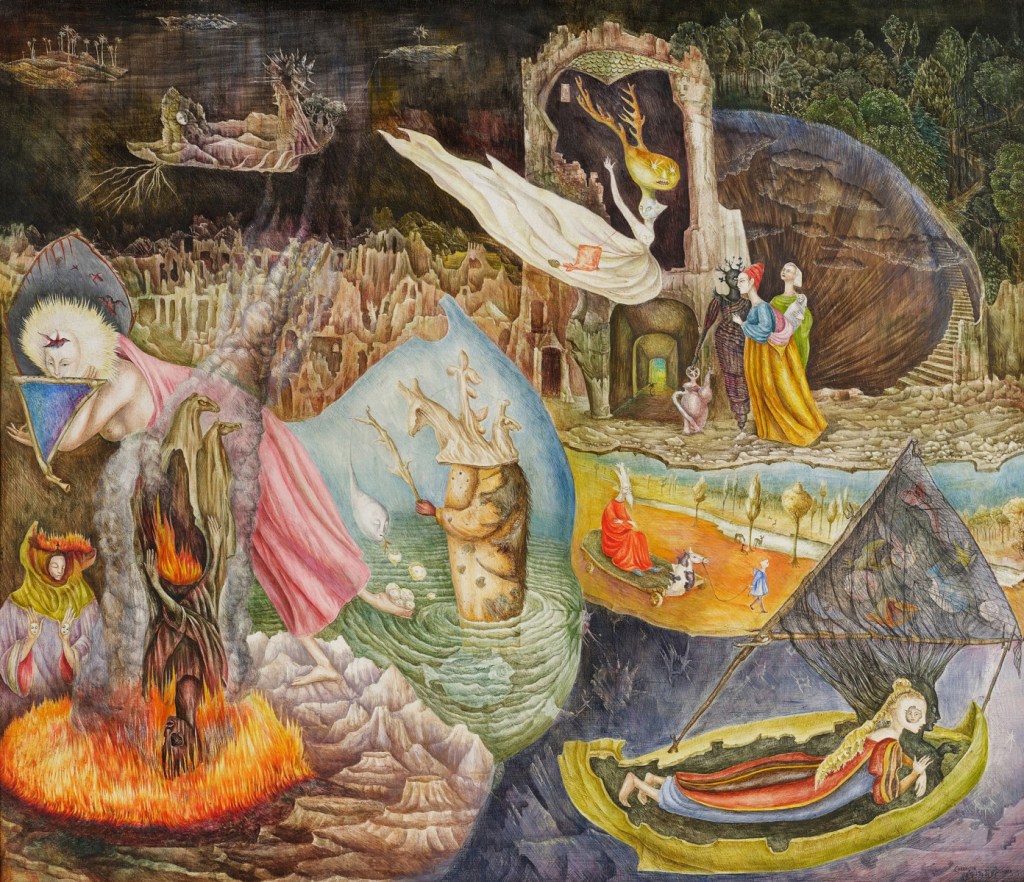
Any movement that defies traditional societal norms automatically becomes political. Surrealist thought, now rebranded as anything whimsical, has become deeply pathologized as psychoanalytic obsessions have catalogued and dungeoned all areas of human consciousness. Earlier condemnations include hysteria or schizophrenia—new-aged criticisms include maladaptive daydreaming or age regression. Defaulting to naivete or cherishing nostalgic media does not equate to any form of structural mental deformation, yet deeply offends the jaded, chronically online, defenders of conservative practices who themselves struggle to perfectly conform to. The antithesis to the striving failure to meet the status quo looks like the search inwards for more vibrant and marvellous ways of existing that only appeared in distant childhood memories. Creativity, love, and joy, are the products of independent living, and the solution to years of depressing turmoil.
Wannabe Instagram influencers appear to be the only demographic capable of materially investing in whimsy, although by abusing capitalism to spend on products of choice, they are still acting in opposition to the political structures that demand restrictive spending on mandatory products. Surrealism proposes that if daily operations of living do not result in satisfactory wealth or systematic gain, that acting in ways that satisfy the lust of the inner child like impulse buying or watching the same DVD until it deteriorates, become properly sufficient activities.
The return to surrealism in “dreamcore” art, music, and films reveals that the whimsy we yearn to express has once again seeped into the types of forms we gravitate towards and require in order to stimulate fractional peace and stability. The same uncertainties experienced and tamed in the developing world of 1924 exist in the not quite formalized futuristic dystopia of today. So despite surrealism disappearing as new trends emerged, the need for an escapist aesthetic has only remained.
 String of Hearts
Leave a comment